
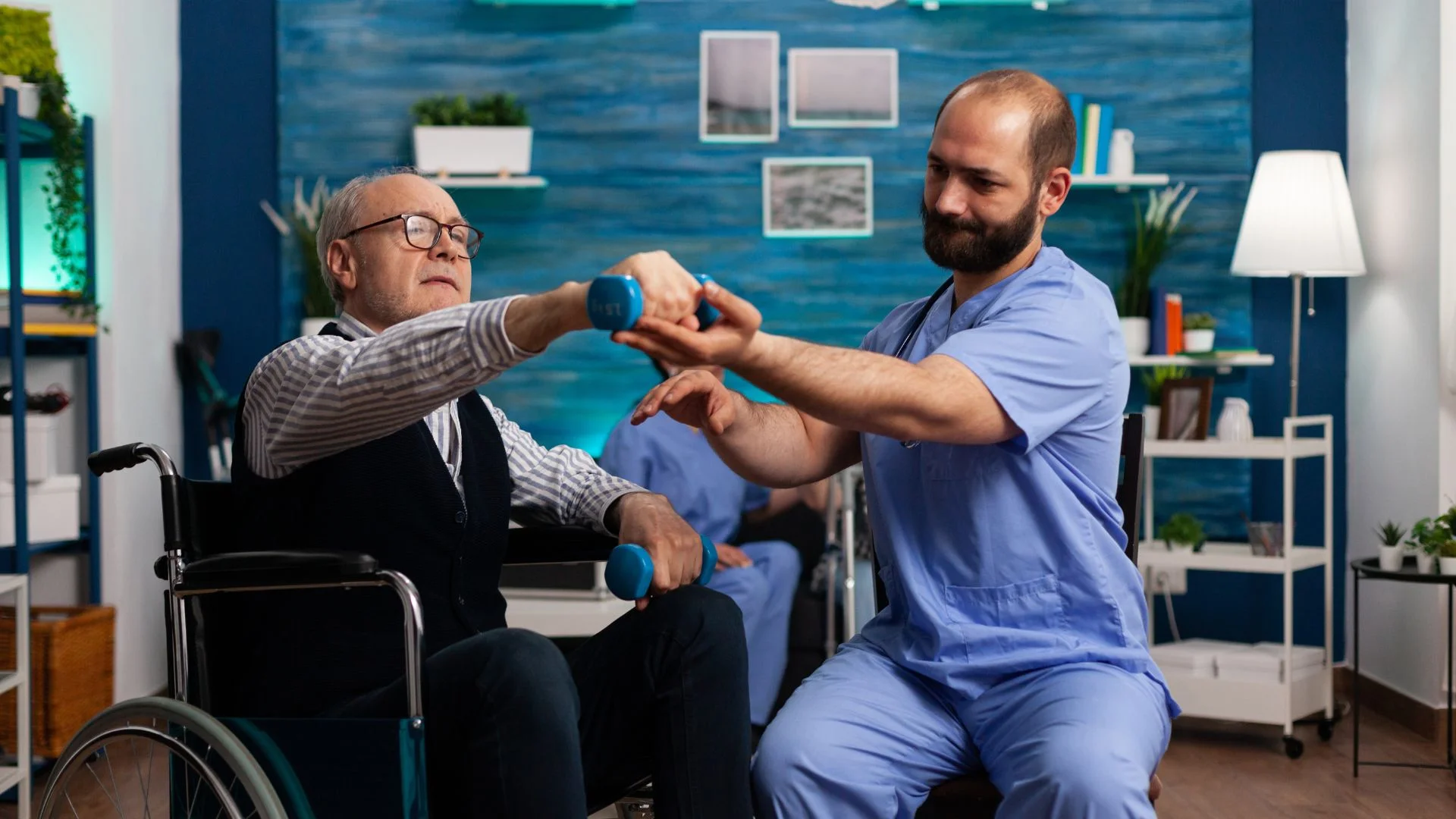
Stroke recovery often moves in uneven phases. Some abilities return quickly, while others take more time, especially when the arm or hand has been affected. Many survivors try using the stronger arm for everything because it feels easier and safer. That habit grows silently, and over weeks or months, the weaker arm becomes even less capable. This is where the science behind constraint-induced movement begins to matter.
Families and clinicians across rehabilitation settings have seen how the brain adapts in unexpected ways. Even when an arm feels unresponsive, the neural pathways are not fully lost. They are simply underused. When the right environment, repetition, and guidance come together, the brain starts responding again. This blog explores that idea with a practical lens and keeps the focus on what stroke survivors experience every day.
This blog will discuss how constraint-induced movement therapy works, why it helps, and what stroke survivors can realistically expect from it.
Understanding Why Recovery Gets Stuck
Stroke survivors often say the same thing in early rehab. They know their affected arm is weak, but they feel the brain is not “listening.” This happens because the stronger arm gradually takes over. The body is smart in a way. It wants to get tasks done, so it stops depending on the weaker side. Over time, the weaker arm gets even less stimulation. This process is known in many rehab circles as learned non-use.
Still, the brain remains capable of reorganizing, especially during the first year after a stroke. This is where neuroplasticity, the brain’s natural ability to form new pathways, becomes the foundation for arm recovery. When planned well, rehab can shift the balance back toward active use.
What Constraint-Induced Movement Therapy Actually Does
Constraint-Induced Movement Therapy, often shortened to CIMT, focuses on one clear idea. The stronger arm is gently restricted for certain hours in a day so the weaker arm must engage with daily tasks. This is not as harsh as it may sound. It is controlled, supervised, and thoughtfully designed to gently push the weaker side back into action.
Therapists combine this restriction with structured, repetitive exercises that feel functional instead of mechanical. Patients may practice tasks like opening clips, lifting small objects, stabilizing cups, or buttoning fabrics. It is not about muscular strength alone. It is about retraining the brain to send clearer signals.
Over time, survivors often notice a shift. The weaker arm starts responding faster. Movements become more coordinated. Everyday life starts including both hands again. This marks the start of neuroplasticity recovery, and though progress differs from person to person, the direction is often positive.
Why CIMT Works Better Than Traditional Arm Exercises Alone
CIMT is not a replacement for regular physiotherapy. It is an extension that fills a very specific gap. Many stroke survivors unknowingly depend on the stronger side while doing traditional exercises at home. Even during therapy sessions, their brain may still choose the easier route.
CIMT prevents that habit from creeping back in.
Here is what makes it uniquely effective:
- It forces the weaker arm to participate instead of being avoided.
- It encourages repetition that the brain needs to form new pathways.
- It helps patients reconnect movement with purpose, not just effort.
- It reduces fear of using the affected arm in everyday situations.
The blend of restriction plus guided practice creates an environment where neuroplasticity gets activated repeatedly throughout the day. In most rehab centers today, this principle is one of the most promising ways to rebuild upper-limb function after a stroke.
How a Typical CIMT Program Looks
CIMT is carefully planned and monitored by a physiotherapist or neurorehabilitation specialist. Most programs last two to three weeks. They are not rushed. Instead, they involve practice spread across the day, along with short, achievable tasks.
A typical day may include:
- A warmup to prepare the affected arm.
- Task-oriented practice like picking objects, rotating the wrist, or lifting small weights.
- Transitional activities, for example, moving between sitting and standing while using the involved arm.
- Real-life simulations such as managing cutlery or holding bags.
At the same time, the stronger arm is placed in a soft mitt for limited hours. Patients often worry about discomfort at first, but most adjust within the first few days. Rehabilitation teams also make sure that no unsafe situations arise at home or in therapy.
The Role of Motivation and Family Support
In truth, CIMT relies as much on mindset as on muscle activation. Stroke recovery is a deeply emotional journey. Survivors often feel frustrated when progress is slow, and families sometimes struggle to understand why the weaker arm does not improve faster.
This is where communication and reassurance matter. When families support the process, when caregivers help with safe practice, and when the therapy team sets realistic expectations, survivors feel more confident. Small wins feel bigger. The fear of moving the affected arm gradually fades.
Common Questions Patients Ask About CIMT
Over time, therapists tend to hear similar doubts. Addressing them directly helps patients stay committed.
- Will it hurt? Usually not. The exercises are designed around capability, not force.
- What if my arm barely moves? Even tiny movements count. CIMT builds from very small responses.
- Is it only for recent stroke survivors? No. Many people benefit even after several months or a year, depending on their condition.
- Will the stronger arm get weaker? The restriction is temporary and safe. It does not cause long-term weakness.
These small clarifications help people start the program with clarity instead of hesitation.
Where Neuroplasticity Fits In
The science behind CIMT is grounded in neuroplasticity. The brain needs repetition, purposeful movement, and task relevance to reorganize itself. CIMT gives all three consistently. It encourages the weaker side to re-engage, and over weeks, the neural signals begin to strengthen.
Many families think recovery depends only on muscle strength. In reality, much of it happens inside the brain. The arm simply reflects that internal progress. When survivors notice a new ability like holding a glass or lifting a spoon again, it often signals deeper neurological changes.
This is what makes constraint-induced movement such an important tool, especially in dedicated neurorehabilitation environments.
CIMT as Part of a Broader Recovery Journey
CIMT works best when it is combined with other therapies such as balance training, gait rehabilitation, manual therapy, or fine motor practice. Stroke recovery is rarely about one technique. It is a collection of small, steady improvements across different areas.
At the same time, CIMT gives something special. It restores confidence in the arm that many survivors had almost given up on. Families often say the same line after the program. They feel they have witnessed a part of the survivor’s personality come back.
Conclusion
Constraint-induced movement continues to give stroke survivors a real chance to regain function in their affected arm. Recovery is never identical for everyone, and some days feel slower than others. Still, with the right guidance, structured practice, and consistent reinforcement, the brain responds. The arm follows. And daily life slowly becomes more independent again.
Near the end of a program, survivors often express pride in using the weaker arm actively. That simple shift reflects how powerful focused rehabilitation can be. CIMT reminds us that progress does not always come from doing more, but from doing the right things with intention.
If a survivor is seeking a path that meaningfully improves arm movement, constraint-induced movement can be an important part of that journey.